Eastern Alliance for Greenhouse Action
Council Home Energy Program
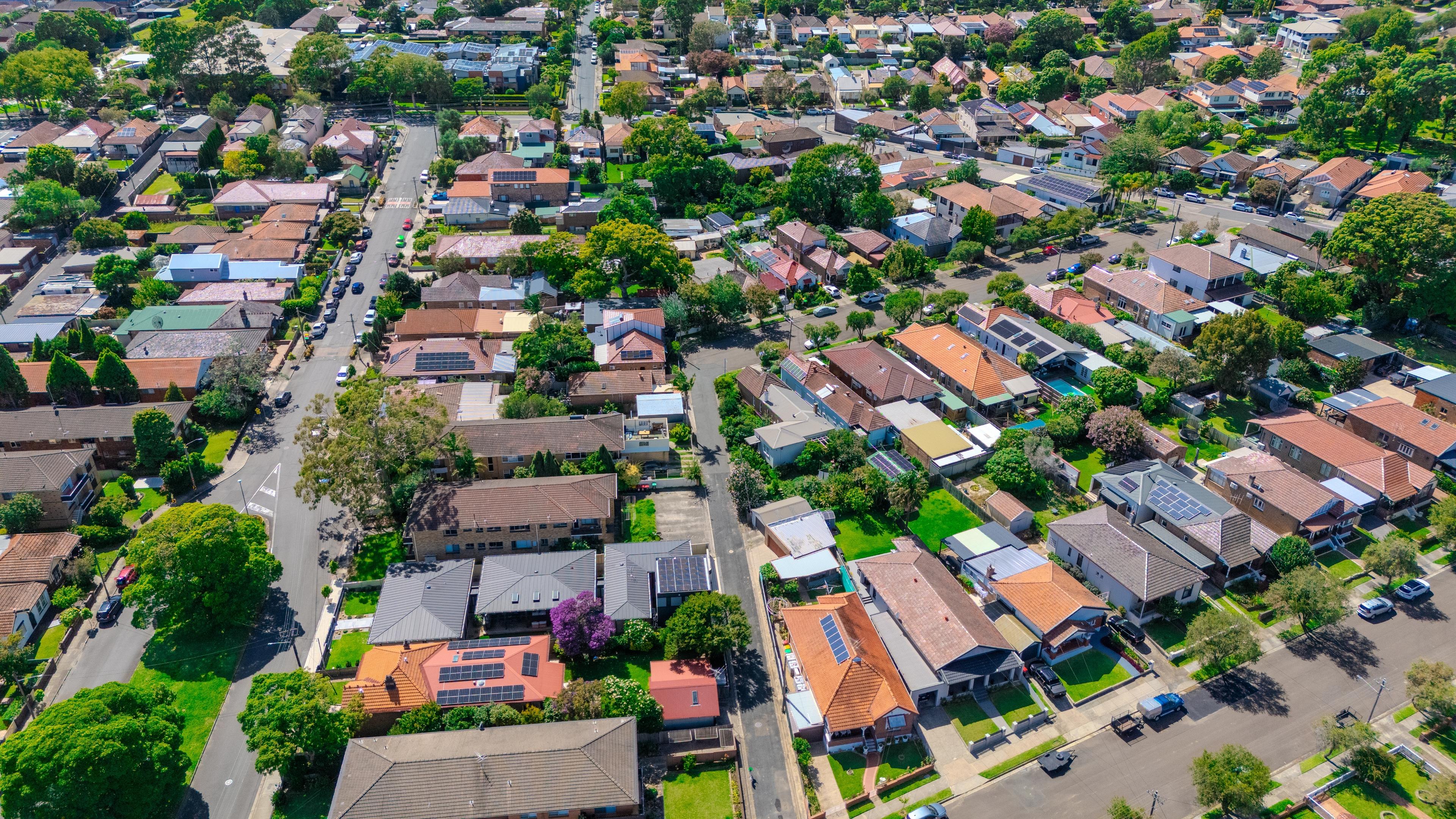
Council-backed regional home energy upgrade program launched in 2017 by the Eastern Alliance for Greenhouse Action. Supports households and renters across participating Victorian councils by connecting them with vetted suppliers, managing quality assurance, and helping councils deliver upgrades locally alongside access to rebates.
Involved in this program?
Let us know if anything on this page needs updating.
Contact
Name
Anna Imberger
The Organisation
The Initiative
Program
- Householder
- Renter
- Low-income
- Aged
- Detached single
- Apartment
- Townhouse
- Public/social housing
Short overview:
Council Home Energy Program, run by the Eastern Alliance for Greenhouse Action, is a local-government-backed program helping households in participating council areas to electrify with council support. Originally solar-focused, since 2018 it has broadened to connect participants with vetted suppliers across solar PV, batteries, heat pump hot water, split-system heating and cooling, insulation, induction cooktops, EV chargers and home energy assessments. It now spans 20 participating councils and also helps participants access relevant rebates, subsidies and finance options.
Future intentions:
Having scaled to around 20 participating councils, the program is shifting from a solar-focused, largely single-installer program toward a broader electrification model with multiple vetted suppliers, more upgrade types and a new online marketplace platform. Further scaling is expected to come through better pricing and household choice, stronger digital delivery, and closer alignment with State Electricity Commission pilots, while retaining a local-government role for subsidy delivery and harder-to-reach households. The parallel Goulburn Murray Solar Savers model already replicates this, covering a further 7 councils through shared contracts, infrastructure and operating approaches in another regional context.
Resourcing & Delivery Model
Funding Sources
- Public state budget
- Public local authority budget
- Membership fees (annual fees paid by participating councils)
- Referral fees (commissions from participating suppliers on completed installations, sometimes per-lead or percentage-based)
- Group buying and discounts
Participating councils pay an annual membership fee, and the program is further sustained by commissions from participating suppliers on completed installations and, in some cases, per-lead or percentage-based fees. Rather than delivering upgrades itself, the program runs a platform that connects households with vetted suppliers, manages procurement and quality assurance, and supports councils with delivery, reporting and engagement. Additional cost-recovery applies to council-specific subsidy programs to cover the extra administrative effort.
Partner Roles & Collaboration
- Local government actors
- State government actors
- Suppliers/installers
- Other service providers
Community Participation Modes
- Dissemination of information & education
- Consultation (e.g. quote process, advice, webinars, events).
EAGA leads program delivery and management, while participating councils provide the trusted local-government channel and local access. Suppliers and installers are selected through a vetting process and provide quotes and installations. Victorian Government schemes such as Solar Victoria and Victorian Energy Upgrades supply relevant financial support, the State Electricity Commission (SEC) is a strategic partner for pilot activity, and Maroondah City Council continues to host the program team.
Actions & Upgrades
- Loans (past)
- Home energy assessments
- Workshops
- Online information
- Individual advice / consultation
- Product vetting
- Supplier vetting
- Support accessing other programs
- Tailored support for vulnerable households
*EAGA’s 2024–25 annual report records the 1000th solar PV installation as of June 2025.
Outcomes & Impact
CO₂ Emission Savings
- An estimated 18,098 tCO₂e saved as of November 2024.
Energy Bill Cost Savings (annual)
- Over $5.4 million saved on energy bills in total since the program began (to June 2025).
Key Insights
Lessons Learned
- Demand exists, but uptake depends on councils actively promoting the program and committing beyond short one-year cycles; where councils lack communications capacity or start and promote late, installations stay low even when the offer is sound.
- A narrowly defined solar offer no longer matched council climate goals or household needs, so the program had to broaden into whole-of-home electrification covering heat pumps, split systems, insulation, induction cooktops, electric vehicle chargers and home energy assessments.
- Relying on a single installer constrained price, household choice and council confidence, with high pricing leaving many enquiries unconverted; this pushed Solar Savers (now "Council Home Energy Program") toward a panel of multiple vetted suppliers and an online platform.
- Growth in council participation does not automatically translate into smooth delivery; administration around installers, commissions, subsidy variants, reporting, audits, contracts and data became overwhelming, and customising too much for each council strained the small central team, pointing to a need for stronger systems, standardisation and clearer limits.
- Rates-based and similar finance mechanisms were valuable in principle but too administratively heavy to sustain, and for low-income and vulnerable households finance alone was rarely enough; subsidy programs, direct support and trusted engagement through councils and community groups proved more effective.
- Trusted local-government involvement remains central to the program's value, especially for harder-to-reach households, though engagement with vulnerable and culturally diverse communities is slow, labour-intensive and relationship-based rather than high-volume.
- External rebates and policy settings strongly shape which offerings gain traction, with categories outside state incentives, such as insulation, harder to scale and seen as riskier by councils.
- Installation numbers do not capture all of the program's work: it also solves problems for participants, helps improve state rebate processes, supports councils to reach harder-to-reach groups, and gives households a trusted pathway through a confusing market.
Barriers
- Many households requested quotes and showed interest but did not proceed once they saw the pricing, so promising enquiry numbers did not convert into installs.
- Capacity was constrained both centrally and locally: a small team handled around 20 councils, multiple product streams, installer coordination, subsidy programs, reporting, audits, contracts and platform development, while councils varied widely in the communications support, staff time and backing needed to use the program well.
- External state-based rebate and loan processes added documentation and digital-application friction the program could not control, which was especially hard for people with low digital confidence, pensioners or households under stress, leaving the program team and council officers to help participants through systems outside their remit.
- Businesses, rental properties and apartment settings were harder to reach and convert than mainstream owner-occupiers, moving more slowly and involving more complex incentives, approvals and ownership arrangements.
- Fragmented data passing through installers, internal tools and council reporting created errors, duplication, inconsistent reporting and manual workload, becoming a driver for introducing a new platform.
- The financing and delivery policy environment has been unstable: special rates charge models were hard to maintain, and the emergence of state-led one-stop-shop activity created uncertainty about the program's future positioning and long-term planning.
Enablers
- A multi-council shared service gave councils a ready-made delivery structure they could not easily build alone, and delivery through local government brought credibility and access to communities, including via council networks, community groups and interpreted sessions, that market-based approaches struggle to reach.
- Shifting from grant funding to a model of council participation fees and installer commissions created a workable financial base that let the program continue and expand after the original state funding ended.
- Councils were active members whose steering and feedback shaped the program's evolution toward thermal upgrades, vulnerable-household support, rentals and broader electrification.
- The vetted supplier approach gave households a quality-assured way into the market and gave councils confidence in who residents were referred to.
- Connecting households into wider support such as Solar Victoria rebates and loans, and later collaboration with the State Electricity Commission, made the program more useful and scalable than a stand-alone council offer.
- A willingness to redesign the model, retendering, expanding the product range, moving to a supplier panel and developing an online marketplace and reporting platform, helped the program stay viable as pricing issues, council dissatisfaction and delivery complexity grew.
Local Solutions
- The program was built as a shared service because participating councils differ widely in staff resourcing, communications support, budget flexibility and sustainability capacity, so some could actively promote and use it while others had limited delivery capacity.
- Different community profiles drove tailored outreach, including interpreted sessions and translated materials for Chinese-speaking communities in Manningham, Vietnamese-speaking communities in Brimbank and deaf-community outreach in Casey, rather than generic promotion.
- Local government decision cycles shaped delivery, with election caretaker periods, annual budget cycles, delayed sign-offs and promotion timing meaning the program could not run as a continuous market offer.
- Local market conditions, including pricing, installer performance and supplier availability, varied by area and were one reason the program moved from a narrower structure toward a supplier panel and new platform.
- Council finance, rates and approval systems determined which financing pathways were practical, making rates-based finance much harder to implement across different municipalities than it appeared in principle.
- Regional variation led to a franchise-style approach: Goulburn Murray Solar Savers operates as a parallel regional version using shared contracts and program infrastructure while remaining locally appropriate, rather than extending one identical model everywhere.
Knowledge Sharing
- Council Home Energy Program draws on earlier Solar Savers delivery, including Darebin's rates-based finance experience and Hepburn's pensioner-focused model, and exchanges knowledge with participating councils on subsidy design, outreach and implementation challenges. It also coordinates with related initiatives, including State Electricity Commission work on pilot activity and one-stop-shop development, and parallel regional delivery through Goulburn Murray Solar Savers using shared contracts, program infrastructure and operating approaches.
Needs & Support Requirements
- More stable and adequate public funding is needed to reach low-income and vulnerable households, who are unlikely to act through standard market offers or repayment-based mechanisms.
- Stronger shared communications and marketing support, and more capacity in the central team, are needed: many councils lack strong communications teams, and the small central team cannot produce large-scale communications or meet councils' expectations as the program grows.
- Better digital systems are needed to reduce manual work in quoting, supplier management, council reporting and data as the program scales.
- Longer-term council commitment beyond one-year cycles is needed to build momentum, justify staffing and spend subsidy budgets effectively.
- Clearer, simpler external rebate processes are needed so households, particularly pensioners and those facing digital or documentation barriers, are not blocked by application friction that falls back onto councils and the program team.
- A simpler financing model that councils can administer without excessive complexity is needed, backed by appropriate policy settings, given the limits of rates-based approaches.
Data Collection & Sources
Data was collected over the period March 2025 – June 2026. Data collection involved desktop research and an interview with a program representative. The entry was updated based on a form submission received on 03.11.2026.
Information sources used:
- https://solarsavers.org.au/ (Solar Savers home page)
- https://solarsavers.org.au/about/ (About Solar Savers)
- https://solarsavers.org.au/faqs/ (Solar Savers FAQs)
- https://solarsavers.org.au/government-rebates/ (Solar Savers rebates and savings page)
- https://solarsavers.org.au/home-energy-assessments/ (Solar Savers home energy assessments page)
- https://solarsavers.org.au/products/ (Solar Savers products page)
- https://solarsavers.org.au/products/insulation-and-draught-proofing/ (Solar Savers insulation and draught proofing page)
- https://solarsavers.org.au/events/ (Solar Savers events page)
- https://solarsavers.org.au/rentals/ (Solar Savers rentals page)
- https://eaga.com.au/projects/solar-savers/ (EAGA Solar Savers project page)
- https://eaga.com.au/about/people/ (EAGA people page)
- https://eaga.com.au/wp-content/uploads/2024/08/EAGA-Annual-Report-2023-24.pdf (EAGA Annual Report 2023–24)
- https://eaga.com.au/wp-content/uploads/2025/10/EAGA_2024-25_AR_FA2_ONLINE.pdf (EAGA Annual Report 2024–25)
- https://eaga.com.au/solar-savers-launched/ (EAGA Solar Savers launched post)
- Interview with program representative (conducted on 14/3/2026)