Ku-ring-gai Council
Sustainability Rebates
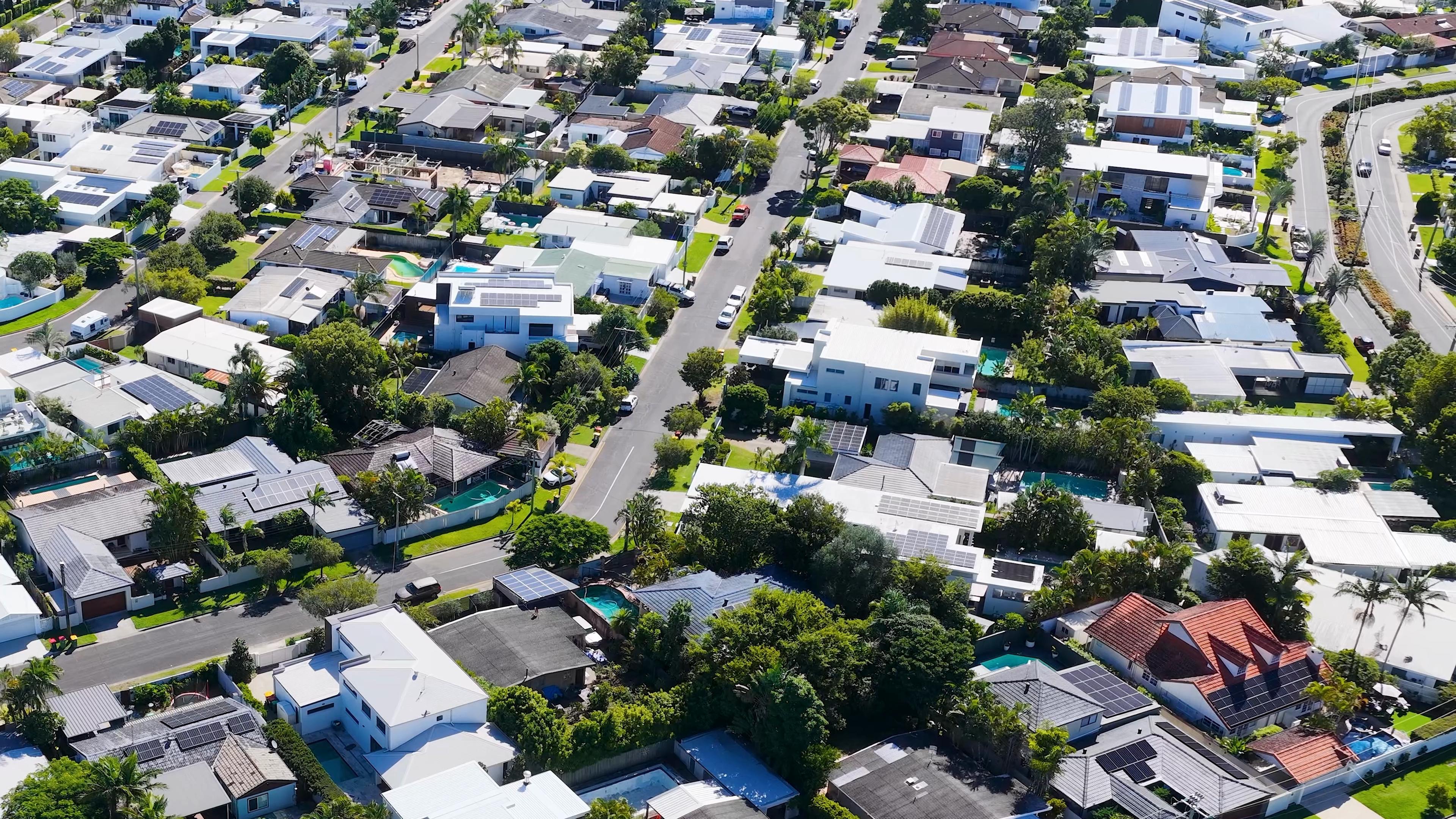
Council-run local home energy upgrade program launched in 2018 by Ku-ring-gai Council. Supports homeowners and renters across the Ku-ring-gai area by offering partial rebates that reduce the cost of upgrades pre-approved by council and reimbursed once installed.
Involved in this program?
Let us know if anything on this page needs updating.
Contact
The Organisation
The Initiative
- Householder
- Renter
- Detached single
- Apartment
- Townhouse
Short overview:
Ku-ring-gai Council's Sustainability Rebates Program is a council-funded household upgrade incentive supported by Council's Environmental Levy. Its Energy Smart Rebates and Smart Units Rebates streams provide partial rebates for home electrification and energy efficiency upgrades to eligible residents in houses and apartments, covering solar PV, batteries, induction cooktops, insulation, heat-pump hot water systems, efficient pool pumps and selected window improvements. Applicants must not have claimed the same rebate within the previous five years. Eligible applicants receive a reference number that tracks the application through purchase, installation and reimbursement. Rebates are capped at $3,000 per household, and most items are completed within six months (pool pumps within 21 days).
Future intentions:
The program is not currently oriented toward major expansion. Its main recent change came in 2025, when council split the previous combined solar PV and battery rebate into separate solar and battery rebates and added an induction cooktop rebate. Strong early uptake then fully pre-allocated the annual budget within months, placing the rebates on hold until the next financial year. Council expected to begin a review in April 2026 to consider possible changes, though major changes were seen as unlikely at that stage.
Resourcing & Delivery Model
Funding Sources
- Public local authority budget (Environment Levy)
- $125,000 annually ($100,000 for Energy Smart Rebates and $25,000 for Smart Units Rebates)
- Rebates and reimbursements
A council-administered, Environmental Levy-funded rebates and reimbursements model: eligible households receive partial rebates for approved upgrades through pre-approval and post-install reimbursement, sometimes covering up to 50% of costs, subject to caps, five-year claim limits and fixed annual budget allocations.
Partner Roles & Collaboration
- Community organisations
Community Participation Modes
- Dissemination of information & education (through council e-news, social media, printed materials, libraries, community events, Sustainable Futures Day, and informal promotion by Net Zero Champions)
Ku-ring-gai Council runs the program directly, promoting the rebates through its communication channels, assessing applications and processing payments. Net Zero Champions informally support outreach by promoting council programs through their own local engagement activities and networks.
Actions & Upgrades
- Rebates*
- Workshops
- Equipment loaning
- Online information
- Solar PV
- Batteries
- Hot water heat pumps
- Insulation
- Electric appliances
*Energy Smart rebates processed: 53 in January–June 2025 (including 29 combined solar PV and battery rebates and 9 insulation rebates) and 212 in July–December 2025. Source: Council’s June and December 2025 biannual reports.
Outcomes & Impact
Economic Value Creation
- $987,566 spent by residents on top of $53,000 in council rebates (July–December 2025)
Key Insights
Lessons Learned
- Financial incentives can encourage households to choose more energy-efficient and electric upgrades even in a relatively affluent area, including when rebates are not their only reason.
- Rebate design strongly shapes demand: splitting the previous solar-and-battery rebate and adding an induction cooktop rebate changed the offer's attractiveness and drove strong uptake.
- Fixed-budget rebate programs need careful calibration: attractive incentives, combined with external schemes, led to the annual allocation being fully pre-committed within a short period.
- In a relatively affluent LGA, open-access rebates may not target households with the greatest need, since universal access is simple and widely available but can direct public funds toward residents who already have the means to invest.
- Households are more attracted to some technologies than others, with solar and batteries remaining most popular while insulation and windows drew less interest.
Barriers
- Limited annual funding constrains the program even when demand is strong, with the rebate budget fully pre-allocated early in the financial year and the program placed on hold until the next funding cycle despite continued interest.
- The council-run model carries a significant administrative burden, with pre-approval, claim review and payment processing all managed internally; the pre-approval step in particular adds friction, even though it supports eligibility checking and budget control.
- Some groups face structural barriers to access, especially renters who do not control upgrade decisions in their homes.
- Household demand does not align evenly across upgrade types, as higher-interest items such as solar and batteries attract much more attention than insulation or window upgrades, making it harder to drive uptake in measures that may still deliver strong efficiency benefits.
Enablers
- The Environmental Levy gave the program a stable local funding base, providing council with a dedicated source to run a rebate program of meaningful scale.
- Dedicated council resourcing, including a staff role primarily responsible for the program, helped council handle pre-approval, claims and administration internally.
- Strong promotion through multiple council channels, including e-news, social media, printed materials, libraries, events and Sustainable Futures Day, plus informal promotion through Net Zero Champions and related community networks, supported uptake.
- A relatively affluent local population, with higher disposable income and greater capacity to invest in upgrades, made it easier for residents to take up rebate-supported purchases such as solar and batteries.
Local Solutions
- Ku-ring-gai's Environmental Levy made a council-run rebate model possible, providing a dedicated local funding source so council could run the scheme directly rather than rely on an external delivery model.
- The area's relatively high socio-economic profile supported a co-contribution approach, designed on the assumption that many local households could contribute to upgrade costs themselves, making partial rebates workable.
- Local housing and lifestyle patterns influenced which upgrades were included, for example efficient pool pumps, considered relevant because Ku-ring-gai has a high proportion of pool owners.
- The local mix of houses and apartment blocks shaped the rebate structure, with separate Energy Smart Rebates and Smart Units Rebates streams.
Knowledge Sharing
- Ku-ring-gai Council both shares and draws on knowledge through internal reporting and external networks. Internally, the program sits within a monitoring and evaluation framework with quarterly reporting to council, supported by cross-directorate meetings. Externally, council takes part in several forums, including the Northern Sydney Regional Organisation of Councils, a regional net zero group focused on community engagement, and the national Electrify Everything local government network, which support exchange on program design, implementation and community engagement. The program team noted that information sharing between councils is generally strong, whereas timely information from state rebate and incentive schemes is less consistent.
Needs & Support Requirements
- Continued dedicated staff resources, including a role with primary responsibility for the rebates, since the program requires ongoing management, review and administration.
- Some administrative tasks could be managed outside the main program role, so the program relies less on one position.
- Stronger support is needed to shift household attention toward energy efficiency upgrades such as insulation before big-ticket technologies like solar and batteries, as these demand-reduction measures are important but much less attractive to residents.
Data Collection & Sources
Data was collected over the period December 2025 – June 2026. Data collection involved desktop research and an interview with a program representative. All data was validated by a program representative.
Information sources used:
- https://www.krg.nsw.gov.au/Environment/Sustainable-living/Sustainability-rebates (Ku-ring-gai Council – Sustainability rebates)
- https://www.netzero.krg.nsw.gov.au/Take-action/Browse-by-topic/Claim-a-rebate/Sustainability-rebates (Ku-ring-gai Council Net Zero – Claim a rebate)
- https://www.krg.nsw.gov.au/files/assets/public/v/1/hptrim/information-management-publications-public-website-ku-ring-gai-council-website-council/delivery-program-2025-2029-and-operational-plan-2025-2026-december-2025-biannual-report.pdf (Ku-ring-gai Council – Biannual Report, December 2025)
- https://www.krg.nsw.gov.au/files/assets/public/v/1/hptrim/information-management-publications-public-website-ku-ring-gai-council-website-council/delivery-program-2022-2026-and-operational-plan-2024-2025-june-2025-bi-annual-report.pdf (Ku-ring-gai Council – Biannual Report, June 2025)
- https://www.krg.nsw.gov.au/files/assets/public/v/1/hptrim/information-management-publications-public-website-ku-ring-gai-council-website-environment/environmental-levy-fact-sheet-2022.pdf (Environmental Levy Fact Sheet 2022)
Interview with program representative (conducted on 2/4/2026) and validation done on 14/4/2026